Everyone could use FREE professional development. As an organizer of the Reform Symposium, I wanted to personally invite you all to our annual Reform Symposium Conference for New Teachers (but don’t be fooled, it is really for ALL teachers), which will take place on Saturday, January 8th, 2011. You can attend this worldwide conference from the comfort of your home or anywhere you have Internet access. We have some of the best educational speakers in the world involved. This conference provides you the opportunity to connect with educators and professionals in the field of education worldwide. Over 2400 educators from 59 countries attended our last conference in July. This year we will focus on interactive presentations that help teachers with creating engaging classrooms and lessons, building relationships with students, improving literacy, working with interactive whiteboards, and much more. This year we look forward to 2 keynote speakers, 18 presentations, and open discussion on classroom management, a panel discussion on parental engagement, a mentor program, and an open lab for hands-on support in helping you continue your professional development in online educator communities. You have never attended a conference quite like this one! Join us for one session or multiples.
The Reform Symposium virtual conference has opportunities for continuing education credits, connections with educators around the world, an amazing lineup of raffle prizes (including prizes to EVERY educator who registers for the conference), and fantastic keynotes and presenters.
Please pass the word about this free conference, print out the brochure and stick it in the teachers lounge, stick it in teacher’s school mailboxes, and pass this post on to the administration at your school.
The voting is finished and the winner is (drum roll please) Gerard Dypiangco and his students are receiving Tag Readers! In November I took the Change the world Challenge. For every unique visitor to iLearn Technology I vowed to donate a penny to a worthy charity. I settled on funding a Donor’s Choose project and had you all help me out by voting for the project that should be funded. Voting ended today (it was close!) Please take a look at the project below. I am happy that I could help fund this project, as you can see from the comments on this post, Gerard is not only an incredible teacher himself, his mother created a legacy of incredible teaching. Thank you Gerard (and all of you teachers out there) for the ways you impact the world each and every day. What you do matters.
Want to have some fun this holiday season? Hunt for and fund a Donor’s Choose project with your family. You won’t believe how good it feels to change education one classroom at a time! Need a suggestion? Start by funding the projects featured in this post. Linda Yollis and her class came a close second place. I would love to help Mrs. Yollis to purchase microphones for her classroom. Through the end of this year, purchase anything from the iLearn Technology Store and 100% of that purchase will be donated to this project. Or if you are feeling extra generous, you can head directly to Donor’s Choose and help complete funding…only $172 to go!
My Students: What do you do when you are reading a book and come across a word that you do not know? You might crack open a dictionary or try to look up the word online. But what if a devi…
My Project: Many of my third graders are reading at or near grade level, which is great. But I still have a sizable number of students who are reading one to two years below grade level. … more»
My Students: What do you do when you are reading a book and come across a word that you do not know? You might crack open a dictionary or try to look up the word online. But what if a device could read the unknown word for you? What an amazing thing that would be!
I teach third grade in a primarily immigrant and working class neighborhood in southern California. Most of my students are learning English as a second language, a couple of them are receiving special education services, a group of students are identified Gifted, and ALL of them love to learn.
My Project: Many of my third graders are reading at or near grade level, which is great. But I still have a sizable number of students who are reading one to two years below grade level. They want to become fluent readers but have not yet acquired the skills necessary to become good readers. What they need right now is more practice reading and listening to stories.
One way to accomplish this added exposure to reading and listening is through the Tag School Reader System, which includes four Tag Readers and four copies of six different books, including Arthur Writes a Story and Honey Saves the Day!: A Story of Young Abe Lincoln. The Tag Reader is a handheld learning tool that provides audio feedback to a student. The device can read the story, pronounce a particularly troublesome word, or provide story context and background information. The Tag Reader can also provide a student with practice of necessary skills such as compare and contrast, cause and effect and sequencing.
With these Tag Readers my students will be provided with on-demand reading assistance when needed. Gradually my less fluent readers will begin to become confident readers as they work at their own pace. Eventually these students will become independent readers, able to read on grade level with their peers. These once struggling students can become readers for life. Thank you.
My students need a LeapFrog Tag School Reading Center Set and a set of rechargeable AAA batteries.
Project Funded! Congratulations Gerard and students, we can’t wait to see what you will learn next! Please be sure to share pictures and stories with us!
The following is a re-post from my other blog: iPad Curriculum. I shared Send Felicity a few weeks ago as part of my advent collection but thought I would give everyone a little more information about this incredible site and invitation for play. Even though Send Felicity has an iPhone/iPod Touch app, the app isn’t necessary to engage in the creative play which is also available on the Send Felicity website and Facebook page. I encourage you to offer your students opportunities for play. I deeply believe that play is a strong catalyst for learning.
What it is: Everyone could use a little more magic and enchantment in their lives and Send Felicity brings students (and teachers/families) just that. Take a look at the video below to watch some of that magic unfold.
Felicity is six and three-quarters years old. She loves imagination, making things, and magic. She comes from a magical place called Thin Air. Felicity invites children everywhere to join her in play. Every day there is a new special surprise waiting for children. Each surprise invites students to engage in creativity, play, imagination, and learning. It is an enchanting-ongoing place that involves technology, imagination, and the real world in new ways. The artists, geeks, and minds behind Felicity are deeply committed to keeping the childhood experience one of magic, imagination, and exploration. They bring these values to life beautifully as an application, website, and social experience. What I love about the Send Felicity experience is the storyline behind Felicity, and the invitation to be part of something that is engaging, meaningful, and magical. The combination of the three makes Send Felicity a unique learning and interactive experience. So, how does Send Felicity work? Children can visit the application or website to learn of a new craft (adventure) to take with Felicity. Felicity takes every day objects like paper plates and makes them magical. Children follow the adventures and create and pretend along with Felicity. Children can take pictures of their finished masterpieces and upload them to the Send Felicity website, sharing the creative experience with others. The application is truly unique and takes what is real and adds a bit of magic (as you saw in the video).
How Send Felicity can enrich learning: Play is an important part of learning. It provides the building blocks for self-regulation and executive functions, promotes creativity, imagination, and divergent thinking. Unfortunately play is often stripped from the classroom. Send Felicity weaves together a wonderful tapestry of play and learning in the form of an application, a website, and a social movement. Felicity uses open-ended play and experimentation that leads to an attitude of fun learning. Felicity helps your students turn ordinary objects into creative works of magic. Use Felicity’s daily dose of magic to spark your students imaginations. Set aside some time for your students to do a little creative play. The benefits that play has on the rest of the learning day will be well worth the time invested. Go beyond the crafts and invite your students to write stories, poems, or secret letters in connection with the imaginative play of the day. Activities for Felicity are open-ended and include art, language arts, literacy, and even math and physics. Send Felicity marries technology and real life in new fun ways. The application is just a piece of the bigger picture. The application takes students physical creation and adds a little magic to it.
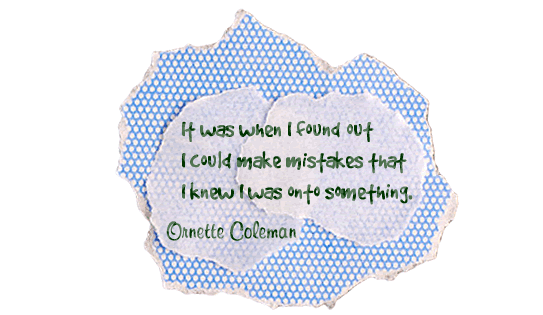
Today we are boldly making mistakes.Today, our children will make a small mess.
Today, we’ll set out on an adventure and begin with an “oops” and end up in a place where we can look and wonder. Together, we can do something mistaken and wrong; and audacious and wonderful to surprise everyone.
This project shows children that it is okay to make mistakes, and that, in fact, those mistakes can be turned into something wonderful, new, and meaningful. Students don’t hear often enough that it is okay to make mistakes and that it is indeed an important part of the learning process. Take a look at what these beautiful oops turn into:
The Send Felicity App has not yet been released to the iTunes store, but don’t let that stop you from using Felicity in your classroom right now, the Send Felicity website is full of fun activities, instructions, and even a bit of magic. You can also check Felicity out on Facebook where she shares creations made by children from around the world! Send your students home with a wonderful gift this holiday season and point them toward the Send Felicity website. Students will love the opportunities for play and imaginations, parents will love the ideas to keep their kids learning and playing. Let parents know about Send Felicity along with this article from Geek Mom for a little explanation.
The wonderful people over at Send Felicity are so passionate about creating a world of wonder and imagination for children to play in that they have made the technology that Send Felicity is based on open source. Interested parents, educators, and developers are invited to sign up to play along with them.
Devices: Compatible with iPhone, iPod touch iOS 3.1.3 or later
What it is: LEGO Education has some truly fantastic resources for classrooms. LEGO Club In-School Edition Magazines are free to schools and designed for first, second, third, and fourth grade students. The 2011 LEGO Club In-School Magazines have two themes: Ancient Egypt and Space Exploration. The magazines can be ordered in two versions. For first grade students, LEGO Club Junior includes puzzles, easy-to-read comics, and fun building challenges. For students in second, third, and fourth grade, LEGO Club focuses on basic reading, critical thinking games, and building ideas. Each magazine comes with a custom teacher’s guide that include fun hands-on activities, classroom tidbits, and articles about how to create a LEGO Smart classroom for your students.
How to integrate LEGO Education Magazine into your curriculum: These fun magazines will have your students learning about and exploring Ancient Egypt and Space Exploration in new hands-on ways. Your students will love the building challenges, comics and reading material, and activities that pique their curiosity. Use the LEGO Club Magazine as an introduction to a unit on Space or Ancient Egypt, or offer the activities in the magazine as extension activities.
Tips: Magazines are packaged in groups of 50, 100, and 200. Consider ordering the magazine for the entire grade or school.
Please leave a comment and share how you are using LEGO Education Magazine in your classroom!
What it is: On January 11, 2011 Google will be launching Google Science Fair. Google has partnered with NASA, CERN, National Geographic, Scientific American, and LEGO group to create a new global competition. There isn’t much information about the logistics of the science fair just yet, but right now you can sign up for fun and free resource kits for your classroom or school and a reminder notification when the Google Science Fair registration opens. The kit comes with bookmarks, stickers, posters, and more.
How to integrate Google Science Fair into your curriculum: Even though there aren’t many details about what the Google Science Fair will look like yet, rest assured with the partners involved it is sure to be an incredible learning experience. This is a global competition and should have ample opportunity for your students to connect with and learn from others around the world.
Tips: Sign up today to receive the Science Fair kit and receive a reminder when registration is open.
Please leave a comment and share how you are using Google Science Fair your classroom!
What it is:Where’s George is a neat site that lets your students track the travel of dollar bills through circulation. Users of the site mark their bills with the website address, and follow the adventure of their money. On the Where’s George site, students can enter the serial number on the bill, enter their current zip code and learn about where their bill has been. If your bill doesn’t have a tracking history, you can start tracking it. Add a short note about the bill including where it was found, what condition it is in, etc. Students and classes can choose to receive an email when the next person finds and records the bill’s next location. In addition to tracking bills, you can view a report by zip code, state, bill denomination, or county.
How to integrate Where’s George into your curriculum: Where’s George is a great site to use as part of a money or currency unit. Let your students track their money and watch the journey of their money unfold. Students can track their lunch money, donation money, or sports club money. Track a dollar with your class for an entire school year. Enter the dollar serial number as a class at the beginning of the school year, record information about it, and write the Where’s George web address on the dollar. Use a class email address to track the bill throughout the year. Map where the dollar travels. Toward the end of the year, have your students write a story about the adventures their dollar has had, including the places it has visited, and the kind of people they imagine that it met on its travels. This is sure to spark some creative stories!
*** When using the site with students make sure to preview where the bill has been before sharing with students, sometimes those bills visit some interesting places that may need to be screened (i.e. strip club). Always preview first!
Tips: Need a different currency to track? Check out this page to find your country’s currency (Europe, United Kingdom, New Zealand, Russia, Switzerland, India, South Africa, Australia, Sweden, Denmark, Japan, China, Taiwan, and Germany). There is also a neat site called Book Crossing that tracks books that you have read and released. Cool!
Please leave a comment and share how you are using Where’s George in your classroom!
It is here! The December issue of #ProjectPLN is ready to share. In this issue we asked everyone to share their favorite web tools. The resulting collection is great! It is always fun to see what tools others couldn’t live without and how they use them to improve learning in their classrooms.
As a side note congratulations to my partner in crime Nick Provenzano (@thenerdyteacher) who will be presenting 2 poster sessions at ISTE 11, one of them being a session about #ProjectPLN! Congratulations Nick, very excited for you!
I am excited to announce the release of a free ebook: The Super Book of Web Tools for Educators- a comprehensive introduction to using technology in all k-12 classrooms. Think of this as an early Christmas present!
Richard Byrne from Free Tech 4 Teachers is the brilliant mind behind this ebook. About a month ago, he approached some of your favorite educators and bloggers (myself included…still can’t wrap my brain around that 🙂 ) to contribute to an ebook. Today is the release and I have to say, it is pretty amazing!! I just finished reading through the finished product and have bookmarked some new tools, had my jaw dropped by Silvia Tolisano and her AMAZING Skype guide, and been inspired all over again by fellow educators and administrators. I am honored to be a part of this incredible resource and guide. Contributers include: Steven Anderson, Adam Bellow, Richard Byrne, George Couros, Larry Ferlazzo, Lee Kolbert, Patrick Larkin, Cory Plough, Beth Still, me (Kelly Tenkely) and Silvia Rosenthal Tolisano. Thank you Richard for the outstanding idea and for acting as editor and pulling it all together!
You can read the ebook in it’s entirety embedded below, by following this link, or download it here.
Did you know that I am other places around these interwebs other than iLearn Technology? It’s true! Sometimes I have to remind myself that not all of my readers have been with me since 2007 hanging on my every word (I know, I’m shocked too) and may need a refresher from time to time on where else they can find me.
I used to be a computer teacher and technology integration specialist. These days I am still working in education as a consultant, offering PD, writing, and working on starting a school. When I was a computer teacher, I taught elementary and made this website for my students. It is separated by grade and subject and has my very favorite websites (at the time- I haven’t updated it recently) on it. These are what I used most often with my students and needed fast access to. I bet you will find some fun websites you can use with your students, or pass it along to your students knowing that everything they find there will be a safe place for them to be.
I write another education blog that is a collection of my dreams for what I want education to be. It is called Dreams of Education, not as many followers there but great conversations!
I freelance write for The Apple on occasion about a variety of topics, usually technology, always education.
I keep a blog where I record great stories of learning, it is called Stories of Learning (imagine that!)
I keep a blog all about iDevices (iPods, iPads, iPhone) apps and their uses in education it is called iPad Curriculum.
(I’m pretty sure I have more of these floating around but this is what comes to mind at the moment- I tend to make a website for EVERY project I have going at any given time :))
I do keep social bookmarks but use a platform that doesn’t seem to be free to use any more (except for me?) Simply Box.
When in doubt, search ktenkely it is the name I use everywhere on the interwebs.
A few tips and tricks for iLearn Technology- if you are searching for ANYTHING type in the keywords into my search box…9 out of 10 you will find something great! Don’t know exactly what you are looking for? Do a multiple category search (find it to the right of this post in the sidebar). Select items from as many of the drop downs as you would like and click “search” Every post or tool that matches that criteria will come up. I sort posts according to Blooms Taxonomy level, grade level, subject, and resource type. Go ahead and give it a try, I know you will find something you can use!
iLearn Technology has a store- in it I sell lesson plans, flipcharts (for use on the Promethean), and my Bloom’s Taxonomy images (Peacock, Umbrella, Tree, and Pin wheel). They are all $.99/ download. I use this money to keep my blogs and websites going. I add to my store occasionally so check back every once in a while for some new finds.
I am a Promethean certified trainer (although it has been 6 month since I have done a training!) I keep my Promethean resources here.
I hope in all of these resources you find something that is helpful for you!
What it is:Figment is a brand new website and writing community for students 13 years old and older (middle or high school only!). This is a place where students can read student writing, share their own writing, connect with other student writers, and discover new stories and authors. Students will find a community of writers and readers who like to share collaborate, and discuss a variety of topics in the online forum.
How to integrate Figment into your curriculum: Do you have students who can’t get enough creative writing time? Figment is a perfect match. Students who love to write can join a community of other students who enjoy to write. This is a great place for them to share their writing, read other students writing and learn how to give, and accept, critiques and recommendations on their writing. This is a great place for students to analyze and evaluate each other’s writing. Have a class of creative writers? Send all of your students to Figment to share their writing with other students. Your students can learn and practice providing constructive criticism and netiquette in Figment. Working with another class from another school, district, state or country? Send both sets of students on Figment as a platform for sharing and discussing their writing.
*There is no teacher portal for Figment, if your students are using Figment in school, be sure to sign up for an account and monitor your students use of Figment.
Tips: The sign up requires an email address, twitter account, or Facebook account. Make sure your students have one of the three before using Figment in class.
Please leave a comment and share how you are using Figment in your classroom!